
Understanding The Difference
What Is The Difference Between The Internet Of Things (IoT) and The Internet Of Doing (IoD)?
Connected devices. Human intentions. Two useful ideas that can come together to help people get things done.
What Is The Internet Of Things?
The Internet Of Things, usually shortened to IoT, connects physical objects with digital systems. These objects can use sensors to observe conditions, exchange information through a network, and sometimes use actuators to change something in the physical world. The Internet Engineering Task Force's description of IoT includes electronics, software, sensors, actuators, and connectivity. The central idea is that a physical thing can participate in a connected system.
A connected thermostat offers a familiar example. It can measure temperature, communicate with a control system, and help operate heating or cooling equipment. A connected water sensor might report a leak. In a business, a sensor might report the condition of equipment or monitor the temperature of stored goods. These examples illustrate how physical conditions can become information that software and people can use.
IoT can also involve action and automation. A connected system might adjust equipment in response to a reading or follow a schedule that a person has configured. It would be misleading to describe IoT as only collecting information. NIST's IoT guidance explicitly includes devices that sense or act upon the physical world, along with a network connection.
When thinking about an IoT example, start by identifying the physical object and its role. What does it measure or control? How does it communicate? What can the connected system do with that information? Those questions help explain why the device is useful. They also provide a clear starting point for understanding how connected equipment can contribute to a broader task that someone wants accomplished.

What Is The Internet Of Doing?
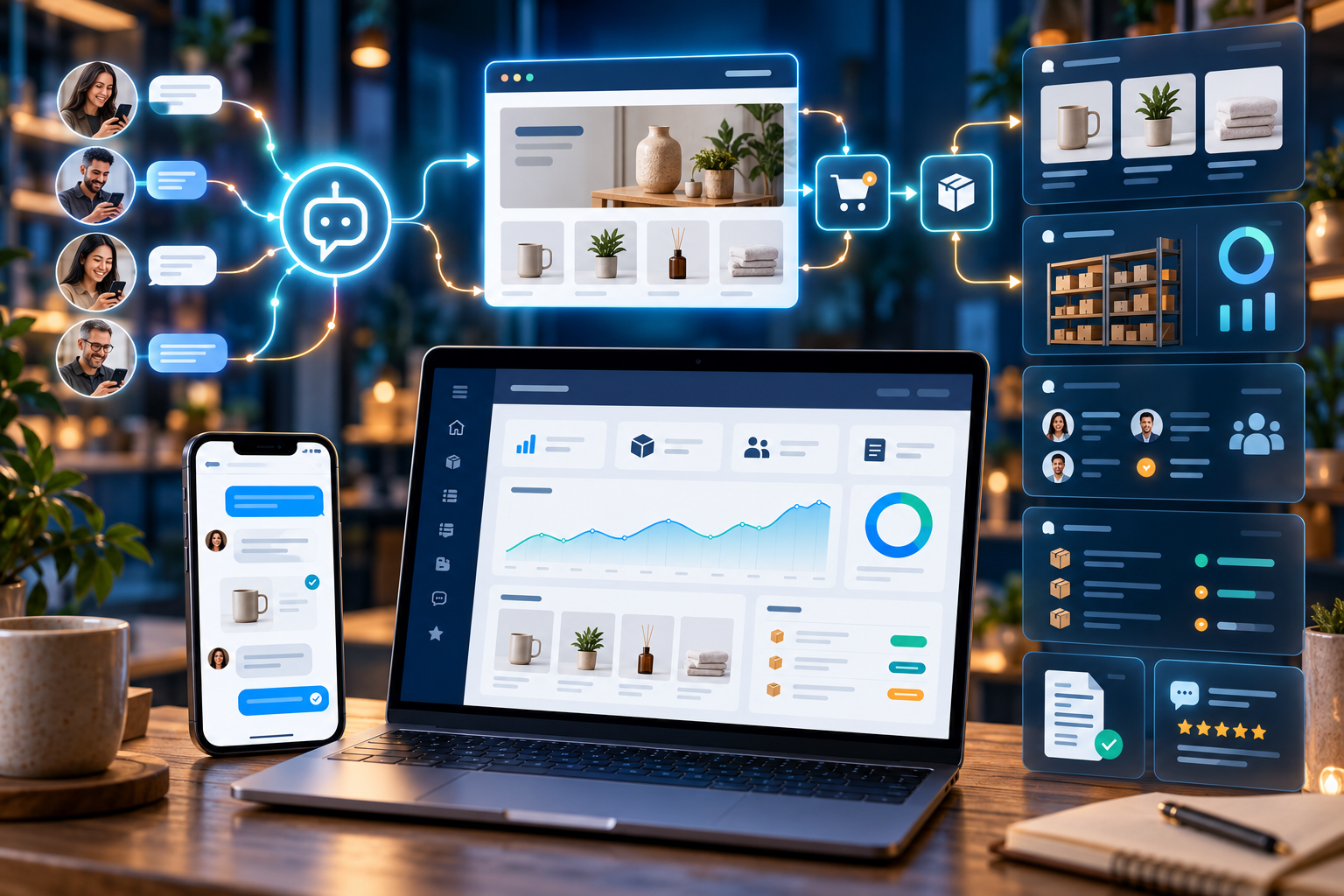
The Internet Of Doing, as we describe it here, connects human intentions to real-world results through AI and websites that can take action. Its starting point is something a person wants accomplished. That might be ordering breakfast, requesting a repair, or arranging an appointment. An assistant helps interpret the request and connect it with a business that offers the relevant information and supported capabilities.
Consider the request, “Elliot, please order me some donuts from that place down the street again.” The useful result is an order with the intended business. Getting there may require identifying the shop, checking its offerings, clarifying quantities, and submitting the customer's choices through a supported ordering process. Each step serves the intention the person expressed, with any necessary approval along the way.
Our Internet Of Doing brings together four parts. The AI Business Directory provides a destination for discovery. A development philosophy encourages businesses to build websites where assistants can do useful work. AIXE gives those websites a way to explain their capabilities and interaction rules. The purpose is helping assistants contribute meaningfully to their relationships with the people they serve.
A special connected appliance is not required for that donut example. The assistant can work with the business's website using the capabilities available there. What matters is having a clear path from the customer's request to an actual business action and an understandable result. A request submitted, an order accepted, and an order fulfilled are different outcomes; a useful assistant communicates which one has actually occurred.

Devices And Capabilities.
Intentions And Outcomes.
The most useful distinction is what each idea emphasizes. IoT describes connected physical things and the systems through which they communicate, sense, or act. Our IoD approach describes how a person's intention can become useful work through AI and businesses that support action. One helps explain the connected equipment involved; the other helps explain the human task and the path toward completing it.
Both can produce real-world effects. Both can involve software, networks, automation, and people. AI can be part of an IoT system, and a connected device can contribute to an IoD workflow. The distinction is therefore about emphasis and purpose, rather than a rigid boundary between technologies. A connected thermostat and an assistant arranging a repair may both help someone deal with an uncomfortable home, while performing different parts of that job.
It also helps to distinguish a device capability from a business capability. Changing a temperature setting is an operation involving equipment. Asking a service company for an appointment involves its offerings, availability, customer information, and acceptance process. A website that supports this request gives the assistant a way to interact with the business. The details of that interaction depend on what the business has made available.
When deciding how these terms apply to an example, ask two questions: “What connected thing is involved?” and “What is the person trying to accomplish?” Sometimes only one question is relevant. Sometimes both are. Keeping those questions separate makes it easier to understand the contribution of each part without suggesting that one approach replaces the other or that every connected device needs an AI assistant.
| Focus | Internet Of Things | Internet Of Doing |
|---|---|---|
| Starting Point | A connected physical object | Something a person wants done |
| Example | A thermostat measures and helps control temperature | An assistant requests a service appointment |
| Connection | Devices and digital systems | Human intentions, AI, and business capabilities |
| Working Together | Provides relevant readings or equipment actions | Uses available information to help carry out the person's task |

A Reading Can Help
Start A Useful Conversation
Imagine that a connected thermostat reports a room temperature that remains uncomfortable despite the cooling system running. The reading describes a condition in the home. A person might then ask their assistant, “Help me find someone to look at the air conditioner tomorrow.” In this example, connected equipment provides useful context, and the person's request establishes the task they want the assistant to pursue.
With appropriate access, the assistant could use available information to explain the situation when contacting a participating business. It might help find a provider, review the services offered, and ask what information is needed for an appointment request. The connected device does not itself have to manage the service relationship. The business website supplies the supported process through which the customer's request can be submitted.
This is an illustration of how the ideas can fit together, rather than a claim that every thermostat or business already supports this workflow. The device connection, the assistant's access, and the business's capabilities all need to exist. A temperature reading also does not establish a diagnosis. It is information that may help describe the concern to the person or business qualified to investigate it.
The useful sequence is straightforward: observe a condition, understand what the person wants, find an appropriate business, and use its supported process. The business then responds according to its normal rules. A proposed appointment, a submitted request, and a confirmed visit remain distinct stages. IoT can contribute observations or equipment actions; IoD provides a way to organize available capabilities around the person's intended outcome and keep them informed as the work progresses.

The Result Should Matter
To The Person Asking
For the person asking for help, the most important question is usually practical: did the useful thing happen? A comfortable room, a requested appointment, or an accepted breakfast order has meaning in someone's day. Understanding IoT and IoD helps explain the connections behind those results, but the technology earns its place by supporting something the person actually needs.
That is why the Internet Of Doing begins with ordinary intentions. A person should be able to describe a task in familiar language and work with an assistant to clarify the details. The assistant needs somewhere useful to go next: a business it can discover, information it can understand, and a supported way to request an action. The website and business remain responsible for the capabilities they offer and how those requests are handled.
For a business owner, this suggests a practical design question: “What should a customer's assistant be able to help them do here?” The answer may be exploring products, submitting an inquiry, or requesting a booking. Those actions can be useful even when no connected physical device is involved. Where device information is relevant and available, it can become part of the task rather than a requirement for every interaction.
IoT and IoD can therefore be understood as complementary ideas with different centers of attention. Connected things help digital systems interact with the physical world. The Internet Of Doing connects a person's intention with AI and businesses capable of responding. Their value becomes clearest in the outcome: the person knows what was requested, understands what happened, and can take the next step with confidence.